Tuesday, June 9, 2009

25 Primates about To Disappear


Sri Lanka’s Hor

ton Plains slender loris has been seen just four times since 1937. Miss Waldron’s red c

olobus monkey was not found in an exhaustive six-year study en

ding in 1999 and there have been no definite sightings since. Vietnam’s golden-headed langur and the Hainan gibbon in China both number in the dozens.


These are the primate species on the edge of oblivion and, according to a report commissioned by three leading conservation charities, scores of others of our closest relatives are poised to suffer the

same fate. It names the top 25 species most in need of help but concludes that 114 primate species are also close to extinction.

The 25 species most at risk include two of our closest great ape cousins, the Cross River gorilla of Came

roon and Nigeria and the orang-utan from Sumatra. Miss Waldron’s colobus also makes it on to the list, although more by hope than expectation. Conservationists declared it officially extinct in 2000, but a photograph taken since then of a similar-looking creature has been tentatively identified by scientists.

The document was compiled by 60 leading primatologists from the world conservation

union, the International Primatological Society and Conservation International. The list includes 11 species from Asia, seven from Africa, four from Madagascar and three from South America.

“You could fit all the surviving members of these 25 species in a single football stadium; that’s

how few of them remain on Earth today,” said Russell Mittermeier, the president of Conservation International.

“The situation is worst in Asia, where tropical forest destruction and the hunting and trading of monkeys puts many species at terrible risk. Even newly discovered species are severely threatened from loss of habitat and could soon disappear.”


The report follows assessments in 2000, 2002 and 2004. “Overall the problems are increasing,” said Eckhard Heymann at the

German Primate Centre in Goettingen, one of the report’s authors. Common problems are habitat loss du

e to logging for timber or oil and mineral extraction, plus bushmeat hunting. The two i

ssues are related because roads cut through tropical forests for logging trucks help give hunters easier routes to wildlife. “Every additional access to remove areas increases the access to hunters,” Dr Heymann added.

Another problem is habitat destruction to make space for biofuel plantations such as oil palm. Developed economies such as the US and Europe

are pledging to use more sustainable energy sources to combat climate change, but this is having a knock-on effect on tropical wildlife.

“It is creating a huge market and now in several countries politicians are thinking of converting tropical forest areas to palm plantations,”

he said.

This particularly affects orang-utan populations. Although they still number in the low thousands, they are disappearing as a faster rate than any other primate species.

Dr Heymann said there had been some successes since the previous report. The golden lion tamarin from eastern Brazil, for example, had benefited from a concerted conservation cam

paign which involved protecting fragments of forest where it lives and breeding it in captivity. “There are still not much more than 1,000 but they are stable and no longer declining,” said Dr Heymann. “The species is not yet safe but still it’s a success story.”

Most endangered

Madagascar

Greater bamboo lemur (Pr olemur simus); White-collared lemur (Eulemur albocollaris); Sahamalaza Peninsula sportive lemur (Lepilemur sahamalazensis); Silky sifaka (Propithecus candidus)

Nigeria, Cameroon


Cross River gorilla (Gorilla gor

illa diehli)

Ivory Coast, Ghan

Miss Waldron’s red colobus (Procolobus badius); Roloway monkey (Cercopithecus diana roloway)

Tanzania

Rondo dwarf galago (Galagoides rondoensis); Kipunji (Rungwecebus kipunji)

Kenya

Tana River red colobus (Procolobus rufomitratus)

Equatorial Guinea

Penn

ant’s red colobus (Procolobus pennantii pennantii) (Island of Bioko)

Colombia, Venezuela

Variegated spider monkey (Ateles hybridus)

Colombia, Ecuador

Brown-headed spider monkey (Ateles fusciceps)

Peru

Peruvian yellow-tailed woolly monkey (Oreonax flavicauda)

Bangladesh, India, Burma

Western Hoolock gibbon (Hoolock hoolock)

Sri Lanka

Horton Plains slender loris (Loris tardigradus nycticeboides); Western purple-faced langur (Semnopithecus vetulus nestor); Pig-tailed langur (Simias concolor)


http://www.commondreams.org/archive/2007/10/26/4838/print/

Indonesia (Mentawai Islands)

Indonesia Pig-tailed langur (Simias concolor) (Mentawai Islands); Sumatran orang-utan (Pongo abelii) (Sumatra); Siau Island tarsier (Tarsius sp.)

Vietnam

Delacour’s langur (Trachypithecus delacouri); Golden-headed langur (Trachypithecus
poliocephalus poliocephalus); Grey-shanked douc (Pygathrix cinerea); Tonkin snub-nosed monkey (Rhinopithecus avunculus)

China

Hainan black-crested gibbon (Nomascus hainanus) (Hainan Island)

T

o re

1026 06 1

ad a related article.1026 06b 1

Animals' rights


WASHINGTON - Military researchers have dressed live pigs in body armor and strapped them into Humvee simulators that were then blown up with explosives to study the link between roadside bomb blasts and brain injury.


For an 11-month period that ended in December, researchers subjected pigs and rats to about 200 blasts, according to Pentagon documents and interviews. The explosions have ranged in intensity, wounding some of the pigs and killing others. Roadside bombs are the top killer of U.S. troops in Iraq and Afghanistan.

The research on pigs has determined that body armor does not worsen brain injury, said Jan Walker, a spokeswoman for the Defense Advanced Research Projects Agency, or DARPA, which conducted the study. The military feared body armor would deflect the force of blasts toward the head and increase the risk of brain injury.

The research also shows that body armor protects troops' lungs and is critical to surviving blasts.

"If use of animal subjects in testing results in our ability to save lives or prevent injury to our troops, we're confident this is the right thing to do," Walker said. Pigs without body armor died from blasts within 24 to 48 hours, while those with armor survived "significantly higher blasts," she said.


Blasting pigs raises "red flags," said Martin Stephens, vice president for animal research issues at the Humane Society of the United States.


"This is a worthy goal, trying to prevent soldiers from being injured by roadside bombs," Stephens said. "I think the relevance of this is highly questionable. People are not pigs."


Col. Geoffrey Ling, who led the study, said pigs are good subjects because their brains are more similar to human brains than those of rats. Pig hearts and lungs are also similar to humans'.

The Pentagon complied with policies that ensure that a minimal number of animals were used in the testing and that they were treated humanely at all times, Walker said.

Scientists discovered details that will help protect troops, said Michael Leggieri, director of the Pentagon's Blast Injury Research Program. "The bottom line to everything we do in this program is to protect the soldier," he said.


DARPA declined to say where the tests had taken place. The next round of the testing is scheduled for later this year.


Stephens called on the Pentagon to end testing on pigs. "Is this the best they can do after several years of losing soldiers to roadside bombs?" he said.


U.S. car companies used live animals, including pigs, for crash tests until the early 1990s. They stopped after protests from animal rights groups, such as People for the Ethical Treatment of Animals.

MR.KAKAR

Ligue de Protection des Oiseaux (LPO)


Lors de sa Conférence mondiale*, BirdLife International, dont la LPO est le représentant officiel en France, a présenté son nouveau rapport sur l’Etat des populations d’oiseaux dans le monde**. Cette publication montre le rôle capital des oiseaux comme indicateurs de l’état de la biodiversité, souligne la baisse de leurs effectifs mondiaux et présente les raisons de ce déclin ainsi que les solutions pour y remédier.


Les oiseaux : de précieux indicateurs de biodiversité

Les 10 000 espèces d’oiseaux répertoriées dans le monde sont nos yeux et nos oreilles : ils sont présents et visibles au quotidien pratiquement partout, à terre, en mer et dans quasiment tous les milieux. Ils sont donc un baromètre précis et pratique de la répartition de la biodiversité et du changement de l’environnement mondial.

Un déclin généralisé de l’avifaune

Aujourd’hui, une espèce d’oiseau sur huit est menacée d’extinction (1 226 espèces) et 190 sont « En danger critique d’extinction ». Les espèces les plus menacées sont celles de grande taille ou aux faibles taux de reproduction, comme les albatros (82 %), les grues (60 %), les perroquets (27 %), les faisans (23 %) et les pigeons (20 %).

Les espèces d’oiseaux communs sont également fortement menacées. Ainsi, en Europe, depuis 26 ans, près de la moitié (45 %) d’entre elles subissent un déclin (soit 56 espèces sur 124 étudiées). Les populations de la tourterelle des bois Streptopelia turtur ont, par exemple, diminué de 62 % sur cette période. La situation est également difficile pour les oiseaux des régions agricoles, comme le bruant proyé, qui a reculé de plus de 60 % entre 1982 et 2005, et l’outarde canepetière qui a subi un déclin de 90 % durant ces trente dernières années.

Des menaces d’origine humaine

L’expansion et l’intensification des industries agro-alimentaires et halieutiques, l’exploitation forestière, la colonisation des espèces invasives, la pollution, la surexploitation des oiseaux sauvages et le changement climatique constituent des menaces majeures. Les causes de déclin sont également plus profondes : les systèmes économiques qui ne reconnaissent pas l’immense valeur de la nature, les déséquilibres mondiaux en terme de puissance et de richesse, la destruction des ressources naturelles, une démographie et une consommation individuelle en constante augmentation.

Des solutions pour sauver l’avifaune et la biodiversité dans son ensemble

- soutenir d’avantage les travaux de conservation ;

- s’assurer que les engagements internationaux en faveur de la biodiversité sont rapidement mis en pratique ;
- mettre en place une bonne gouvernance environnementale ;

- investir plus et mieux ;

- rattacher la protection de la biodiversité à la subsistance et au bien-être des peuples ;

- développer d’importants groupes d’intérêts pour conduire au changement, comme le font BirdLife et ses représentants dans le monde (c’est le cas de la LPO en France);

- protéger les 10 000 Zones Importantes pour la Conservation des Oiseaux ;

- initier d’avantage de programmes en faveur des espèces menacées…

Bien que les gouvernements du monde se soient engagés à stopper la perte de biodiversité d’ici 2010, un oiseau sur huit est aujourd’hui menacé d’extinction et près de la moitié des oiseaux communs européens sont en déclin. La frilosité des grands mondiaux à engager des sommes souvent insignifiantes au regard de leur budget national indique également que cet objectif ne sera vraisemblablement pas atteint.

Allain Bougrain Dubourg
Président de la LPO

http://www.lpo.fr/comm/cpetatdespopulationsoiseauxdansmonde.shtml

Articles/videos:

MR.KAKAR

The Planet's First-ever Mass-Extinction

Amphibians_2


Should we be alarmed at the current massive die-offs being noted in the animal and plant kingdoms? After all, new species arise and old species die off all the time. Its just nature taking its course, right? Not necessarily. The Earth is now entering the sixth mass extinction event in its four-billion-year history, but what’s different about this die-off is that this is the only such event precipitated by a biotic agent: humans.

The extinction numbers far outweigh the emergence of new species. From a purely selfish perspective, humans should be very concerned. Since we haven’t terraformed Mars yet, we still need a livable ecosystem on this planet in order to survive. As mass extinction occurs, experts say that we end up dealing with serious consequences. Recently, a team of scientists have discovered new information, that indicates things are worse than we previously thought.

"There's no question that we are in a mass extinction spasm right now," said David Wake, professor of integrative biology at UC Berkeley. "Amphibians have been around for about 250 million years. They made it through when the dinosaurs didn't. The fact that they're cutting out now should be a lesson for us."


A recent study supported by The National Science Foundation and National Institutes of Health, found that nearly all of the amphibian species that inhabit the peaks of the Sierra Nevada are threatened. Wake and Vance Vredenburg, research associate at the Museum of Vertebrate Zoology at UC Berkeley and assistant professor of biology at San Francisco State University discovered that for two of these species, the Sierra Nevada Yellow-legged Frog and the Southern Yellow-legged Frog, populations over the last few years declined by 95 to 98 percent, even in highly protected areas such as Yosemite National Park. This means that each local frog population has dwindled to 2 to 5 percent of its former size! Originally, frogs living atop the highest, most remote peaks seemed to thrive, but recently, they are also dying off.


In an article published online this week in the journal Proceedings of the National Academy of Sciences, the researchers argue that substantial die-offs of amphibians and other plant and animal species force us to accept that a new mass extinction is facing the planet.


Frogs are certainly not the only victims in this mass extinction, Wake noted. Many other scientists studying other organisms are discovering similarly dramatic effects.


Over 10,000 scientists in the World Conservation Union have compiled data showing that currently 51 per cent of known reptiles, 52 per cent of known insects, and 73 per cent of known flowering plants are in danger along with many mammals, birds and amphibians. It is likely that some species will become extinct before they are even discovered, before any medicinal use or other important features can be assessed. The cliché movie plot where the cure for cancer is about to be annihilated is more real than anyone would like to imagine.


"Our work needs to be seen in the context of all this other work, and the news is very, very grim," Wake said.


As of yet, there is no consensus among the scientific community about when exactly the current mass extinction started, notes Wake. It may have been 10,000 years ago, when humans first came from Asia to the Americas and hunted many of the large mammals to extinction. It may have started after the Industrial Revolution, when the human population exploded. Or, we might be seeing the start of it right now. But whatever the start date, empirical data clearly show that extinction rates have dramatically increased over the last few decades.


Peter Raven, past President of the American Association for the Advancement of Science, states in the foreword to their publication AAAS Atlas of Population and Environment, "We have driven the rate of biological extinction, the permanent loss of species, up several hundred times beyond its historical levels, and are threatened with the loss of a majority of all species by the end of the 21st century."


The causes of biocide are a hodge-podge of human environmental “poisons” which often work synergistically, including a vast array of pollutants and pesticides that weaken immunity and make plants and animals more susceptible to microbial and fungal infections, human induced climate change, habitat loss from agriculture and urban sprawl, invasions of exotic species introduced by humans, illegal and legal wildlife trade, light pollution, and man-made borders among other many other causes.


Is there a way out? The answer is yes and no. We’ll never regain the lost biodiversity-at least not within a fathomable time period, but there are ways to help prevent what many experts believe is a coming worldwide bio collapse. The eminent Harvard biologist Edward O Wilson has wisely noted that the time has come to start calling the "environmentalist view" the "real-world view". We can’t ignore reality simply because it doesn’t conform nicely within convenient boundaries and moneymaking strategies. After all, what good will all of our conveniences do for us, if we keep generating them in ways that collectively destroy the necessities of life?


Posted by Rebecca Sato.

Related Galaxy posts:


Exponential Technologies: Cheer Up World—We Are On the Verge of Great Things

The World's Largest & Deepest Lake, 25-million-Years Old, is in Trouble: A Galaxy Exclusive

* Portions of this post are extracts from a UC Berkeley press release.

Sources:
http://www.nasonline.org/site/PageNavigator/SACKLER_Biodiversity

http://www.berkeley.edu/news/media/releases/2008/08/12_extinction.shtml

http://progressive.atl.playstream.com/nakfi/progressive/Sackler/sackler_12_07_07/david_wake/david_wake.htmlhttp://www.dailygalaxy.com/my_weblog/2009/03/experts-say-the.html


MR.KAKAR

Whitey on the Jacuzzi in the backyard.


See full size image

Sharks are an amazingly diverse group of creatures and defining them is not as easy as it looks. Although they are all fish, they differ enormously in their body shape, size, habitat, behaviour and diet. Many of them look nothing like the animals we associate with the classic image of a shark – some are almost flat, bottom-dwellers, while others are strange-looking creatures that live at enormous depths. But there are some features that are common to all sharks:

  • Unlike other fish, sharks have a skeleton made of cartilage, rather than bone. The skeleton is reinforced in some places with special plates, called tesserae, which are made of hard calcium salts.
  • Sharks all have teeth that are produced and shed at regular intervals. Some sharks can produce several thousand teeth every year, the old ones working themselves loose and being replaced by a new row of teeth behind them.
  • Even a shark’s skin has teeth! A defining characteristic of sharks is the presence of tooth-like scales covering its skin, called dermal denticles. It’s these denticles that give a shark’s skin its resemblance to sandpaper.
  • Sharks have at least five pairs of vertical gill slits, which are almost always mounted on the side of the head. Some species have as many as seven pairs of gill slits.

Most other fish possess
swim-bladders to help keep them afloat, but sharks lack any trace of swim-bladders and use other means of maintaining their buoyancy.


Catching some zzz’s

Monkey sleeping


Giraffe sticking its tongue out

Squirrel

Yawning cat

Dog licking window

Brazilian farmer slays 16-foot anaconda


RIO DE JANEIRO, May 21 (RIA Novosti) - A farmer in Brazil's northwestern state of Amazonas killed a 5-meter (16-foot) anaconda he discovered in his chicken pen, national media reported on Thursday.

Marcu Santus said he discovered the anaconda preparing to swallow the chickens, and feared that the snake could pose a threat to small children in the area.

"The snake remained still for quite a while and I was able run and get my rifle and kill it. When snakes like this can't find food, they become dangerous," Santus said.

Due to severe flooding in northern Brazil over the past two months, cases of wild animals entering villagers' homes have become frequent. Although killing an anaconda is illegal under Brazilian law, in some cases it can be justified if the snake poses a risk to a person's life or property.

The anaconda is one of the largest snakes in the world, and the largest in South America, reaching up to 11 meters in length, and weighing some 150 kilograms (330 pounds). Several cases have been documented of anacondas eating people living near tropical forests in Brazil.


Animals Poke Fun at Photographers

Lion sticking tongue out


We humans love to take pictures of animals. Most of the time these pictures elicit many an “oooh” and an “awww”, and exclamations of cuteness. But what about the animals and how they’re feeling when we decide to invade their space and point flashbulbs in their faces? Well, it seems that sometimes our furry friends really don’t appreciate our paparazzi ways and fight back by refusing to sit pretty. The thing is, it doesn’t stop, but encourages us, and somehow the snapshots still end up cute as ever.

MR.KAKAR


Sunday, June 7, 2009

The Brazilian Wandering Spider And King Cobra

The King Cobra (Ophiophagus hannah) is the world’s longest venomous snake – growing up to 5.6 m (18.5 ft) in length. Ophiophagus, literally means “snake-eater” as it eats other snakes. One single bite of this deadly snake can easily kill a human. This snake is even capable of killing a full-grown Asian Elephant within 3 hours if the larger animal is bitten in a vulnerable area such as the trunk.
It’s venom is not as toxic as other venomous snakes, but King Cobra is capable of injecting 5 times more venom than black mamba and can result in mortality up to 5 times faster than that of the black mamba. It is quite widespread, ranging across South and South-east Asia, living in dense highland forests.


This spider is believed to have the most potent neurotoxic venom of any living spider. Only 0.006mg (0.00000021oz) is sufficient to kill a mouse. They are also so dangerous because of their wandering nature. They often hide during daytime in highly populated areas inside houses, clothes, boots, and cars.
Its venomous bite causes not only intense pain, the venom of the spider can also cause priapism – uncomfortable erections lasting for many hours that lead to impotence.

Puffer Fish And Inland Taipan

The prize for “The World’s Most Venomous Snake” goes to the Inland Taipan of Australia. Just a single bite from this snake contains enough venom to kill 100 human adults or an army of 250,000 mice. Its venom is at least 200 – 400 times more toxic than a common cobra. The Inland Taiwan’s extremely neurotoxic venom can kill an adult human in as little as 45 minutes. Fortunately this snake is very shy and there have been no documented human fatalities (all known bites were treated with antivenin).


Stonefish And Poison Dart Frog

If you ever happen to be running through the rain forests somewhere in Central or South America, do not ever pick up beautiful and colorful frogs – it can be the Poison Dart Frog. This frog is probably the most poisonous animal on earth.The 2 inch long (5cm) golden poison dart frog has enough venom to kill 10 adult humans or 20,000 mice. Only 2 micrograms of this lethal toxin (the amount that fits on the head of a pin) is capable of killing a human or other large mammal. They are called “dart frogs” because indigenous Amerindians’ use of their toxic secretions to poison the tips of their blow-darts. Poison dart frogs keep their poison in their skins and will sicken or kill anybody who touches or eats it.


Maybe Stonefish would never win a beauty contest, but it would definitely win the top prize for being “The World Most Venomous Fish”. Its venom causes such a severe pain that the victims of its sting want the affected limb to be amputated. It is described as the worst pain known to man. It is accompanied with possible shock, paralysis, and tissue death. If not given medical attention within a couple of hours It can be fatal to humans.
Stonefish stores its toxins in gruesome-looking spines that are designed to hurt would-be predators.
Stonefish mostly live above the tropic of Capricorn, often found in the shallow tropical marine waters of the Pacific and Indian oceans, ranging from the Red Sea to the Queensland Great Barrier Reef.....
BY MR.KAKAR


Jelli Fish With Blue-Ringed Octopus

The Blue-Ringed Octopus is very small, only the size of a golf ball, but its venom is so powerful that can kill a human. Actually it carries enough poison to kill 26 adult humans within minutes, and there is no antidote. They are currently recognized as one of the world’s most venomous animals.
Its painless bite may seem harmless, but the deadly neurotoxins begin working immediately resulting in muscular weakness, numbness, followed by a cessation and breathing and ultimately death.
They can be found in tide pools in the Pacific Ocean, from Japan to Australia.


The top prize for “The World Most Venomous Animal,” would go to the Box Jellyfish. It has caused at least 5,567 recorded deaths since 1954. Their venom is among the most deadly in the world. It’s toxins attack the heart, nervous system, and skin cells. And the worst part of it is that jelly box venom is so overpoweringly painful, that human victims go in shock, drown or die of heart failure before even reaching shore. Survivors experience pain weeks after the contact with box jellies.
You have virtually no chance to survive the venomous sting, unless treated immediately. After a sting, vinegar should be applied for a minimum of 30 seconds. Vinegar has acetic acid, which disables the box jelly’s nematocysts that have not yet discharged into the bloodstream (though it will not alleviate the pain). Wearing panty hose while swimming is also a good prevention measure since it can prevent jellies from being able to harm your legs.
Jelly box can be found in the waters around Asia and Australia.


Saturday, June 6, 2009

Wolf


We have cute wolf pictures from the wild, as well as in captivity. Here you can see wolves howling, socializing, or just sticking their tongue out for fun. The species shown here range from the arctic wolf, gray wolf, white wolf as well as wolf puppies.


Dolphin


Our dolphin pictures gallery features high quality photos with real wild dolphins in the ocean. They can be seen jumping, or just coming out of the water to say hello. These beautiful bottlenose dolphins are quite a wonder.

Did You Know


Butterflies prefer flowers that are pink, yellow, red, or purple and have single petals.

Cool Tiger


This website is dedicated to bringing you high quality animal pictures. Over the months we have been in operation we have managed to bring you Tiger, Wolf, Dolphin, Bird, Jaguar, and Butterfly pictures. This galleries are just the beginning of our quest to bring you truly amazing animal photos. Remember, without your support this website would not be here, so support us by signing up to our newsletter and telling all your friends about us!
So what are you waiting for, hundreds have signed up to our newsletter, sign up now, and receive an e-mail every time we add new amazing animal pictures to our website.

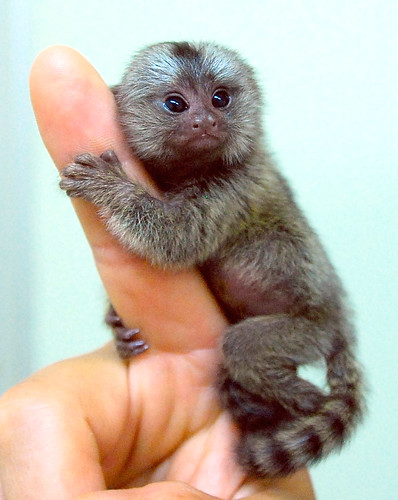
Baby Marmoset monkey


Tell your friends and families about the new Baby Animalz Community. Want Your Image on Babyanimalz.com? Create a Free Account and Submit Your own Baby Animal Photo